Secret Skillset
I've been keeping a secret and I didnt realise it. It took me a very long time to identify the fact that I had unintentianally minimised the technical side of my skillset. But when I sat down with a few people, I could see what I was doing.
Over the last decade, the design "community" has been gone every which way on how to have a marketable skillset, how to present your portfolio, what it take to have a leadership role, specialist vs generalist, UI vs UX, Scaled Agile vs Design Thinking, Double Diamond vs the loop, and the list goes on and on.
Along the way, the discussion turned into yelling. Instead of using the graceful skill of discernment and decsisioning to articulate a perspective, the noise became a continuous stream of discredit and questioning of other designer's competency. Some advocates tried to rationalize it as a "correction" to find the talent with "taste". I found it disgusting and rather damaging.
But I had only recently realised that that I have been hiding my greater demonstrated skillset that of recent has has a significant help during the accelleration of AI tool growth.
Infra.
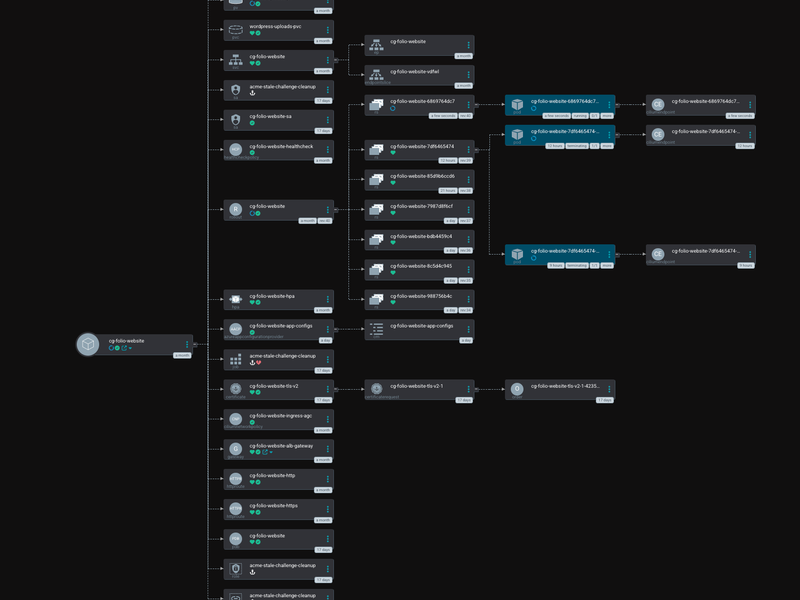
I can certainly design a web application, but no one would have ever seen any of my work without the infrastructure to make it run. It had always been an unquestionalble no-brainer for me to fully deploy and host my own systems. I've been doing this since 2008.
This website is a demonstration of part of a critical breadth of skillset in the area of product design.
This website does not use a template built by someone else. The choice I have made, large and small are not supplemented by another designer's decisions. There are some great templates and themes out there I could have purchased, but this makes it clear how I decided to express my work. A part of it come from a background in fine art where the environment or location can be important ans the piece itself. It also is to demontrate a ability to deliver the vision as intended.
This website is not hosted on a platform pre-optimised for web building. Im not opposed to building website on and services or platforms: Wordpress, Webflow, Adobe AEM, Shopify, BigCommerce, etc. If have design on many of these. However, most of my projects are 0-to-1 products on the edge or near-edge innovation. The existing platforms have a place, such as a mandate to enable modular scalability, auditable access, or existing content and data.
I choose flexibility by building my own. By doing this, the decision chain becomes more real and comprehensive:
Why did I decide to design my site in this way to ensure the intended actions are being takes when visited?
What do I need to do to ensure my site load at the right speed?
How was it optimised to deliver the expected outcome?
Is the site intelligent enough to know who and why someone visited the site so I can curate the right experience?
How deeply do I want to integrate the site into my exsiting data estate?
How do I make sure the site ramins resilient?
How shoud I model the data to get the results I want in the interface?
These may not be pure UX questions, but they are Product Design questions.